

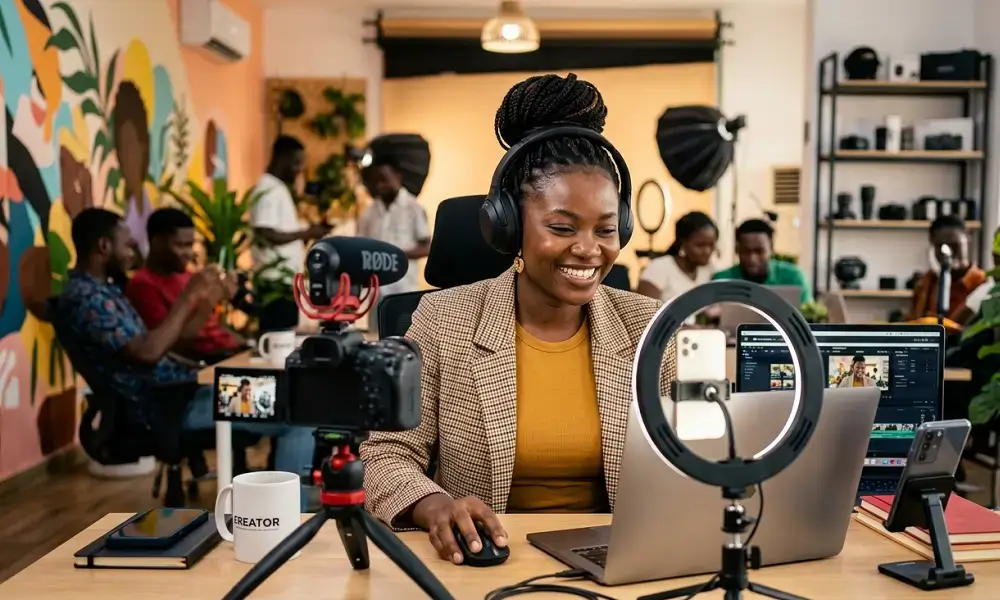
Have you ever imagined why everyone will need to become a creator? This blog post will address that question into detail.
Introduction
Have you noticed something strange about the world today?
People are no longer waiting for companies, schools, or television stations to give them attention. Ordinary people are building audiences from their bedrooms. A farmer can teach farming online. A student can explain math on YouTube. A barber can grow a business through TikTok. A nurse can start a podcast. A mechanic can share repair tips and attract customers from all over the country.
The internet changed the way people make money, build careers, and create opportunities.
And this is why one important truth is becoming clear:
In the future, almost everyone will need to become a creator in one way or another.
Now, when people hear the word “creator,” they usually think about influencers, dancers, or famous YouTubers. But being a creator is much bigger than that.
A creator is simply someone who shares ideas, knowledge, skills, experiences, or entertainment with other people online.
That could be through videos, podcasts, writing, teaching, designing, photography, live streaming, or even simple social media posts.
You do not need millions of followers to become a creator.
You only need to create value consistently.
And in this video, I want to explain why becoming a creator is slowly turning from an option into a necessity.
Let’s talk about it.
Table of Contents
Why Everyone Will Need to Become a Creator
Here are 9 reasons why everyone will need to become a creator.
The Old System Is Changing
For many years, life followed a simple pattern.
Go to school.
Get good grades.
Find a job.
Work for decades.
Retire.
That system worked for many people because information was controlled by big organizations.
Television stations controlled entertainment.
Newspapers controlled news.
Companies controlled jobs.
Schools controlled education.
Ordinary people had very little power to reach large audiences.
But the internet changed everything.
Today, anybody with a smartphone can reach millions of people.
Think about that carefully.
A teenager with a phone can sometimes get more attention than a television station. A small business owner can advertise directly to customers without paying for radio or TV ads. A teacher can upload lessons online and earn money from students around the world.
Attention is no longer controlled only by big companies.
And attention has become one of the most valuable things in the world.
That is why creators are becoming powerful.
Attention Is the New Currency
In the past, owning factories was powerful.
Today, owning attention is powerful.
Every company wants attention.
Every business wants attention.
Every politician wants attention.
Every musician wants attention.
Why?
Because attention leads to influence, trust, customers, and money.
If nobody knows you exist, it becomes difficult to grow anything.
This is why companies now hire creators to market products. People trust creators more than traditional advertisements.
Imagine two situations.
In the first one, a company runs a television ad about a product.
In the second one, a creator you trust talks about how useful that product is.
Which one feels more believable?
For most people, the second one feels more real.
That trust is valuable.
And this is why creators are becoming important in almost every industry.
Every Job Is Becoming More Visible
Years ago, many people could work quietly without showing themselves online.
But today, visibility matters more and more.
If you are a designer, people want to see your work online.
If you are a teacher, people may search your name online.
If you are a chef, customers may discover you through videos.
If you are a farmer, buyers may follow your farming updates online.
Even if you never become famous, your online presence is becoming part of your career.
The internet is becoming your public identity.
This is why people who create content often get more opportunities.
Not always because they are the smartest.
But because people know them.
And this is an important lesson many people ignore:
Sometimes opportunities go to visible people before they go to talented people.
That may sound unfair, but it is true.
People cannot support what they never see.
Artificial Intelligence Is Changing Jobs
Another reason why more people will need to become creators is artificial intelligence.
AI is becoming better at repetitive tasks.
It can write reports.
It can answer customer questions.
It can organize data.
It can create schedules.
It can even generate images and videos.
Many traditional jobs are changing because of this.
But here is something interesting.
Human personality still matters.
Human experiences still matter.
Human stories still matter.
People still connect with people.
A robot can generate information, but people often want connection, perspective, humor, emotion, and real-life experience from humans.
This is why creators who build trust and personality may become even more valuable in the future.
Think about it this way.
If AI can do average work cheaply, then human uniqueness becomes more important.
Your voice becomes important.
Your story becomes important.
Your opinions become important.
Your experiences become important.
That is creator work.
The Internet Rewards People Who Share
The internet is like a giant marketplace of ideas.
The people who benefit the most are often the people who share the most value.
Some people share entertainment.
Some people share education.
Some people share motivation.
Some people share skills.
Some people share information.
And over time, these creators build audiences.
That audience can later become income.
For example, a person who teaches goat farming online may later sell farming courses, consulting, livestock, or farm products.
A person who talks about finance may later write books, sell coaching, or build a business community.
A fitness creator may later sell workout plans or health products.
Content becomes an asset.
That is very important to understand.
When you work a normal job, you are often paid once for your time.
But content can continue working for years.
A video uploaded today may still bring viewers three years later.
A podcast episode may still attract listeners in the future.
A blog post may still appear on Google years later.
Creators are building digital assets that continue producing value over time.
Small Audiences Can Change Lives
Many people avoid creating because they think they need millions of followers.
That is not true anymore.
In fact, small audiences can completely change someone’s life.
Let’s imagine you teach a useful skill online.
If just 1,000 people truly trust your work, you can build a business around that audience.
You do not need the entire world.
You only need the right people.
A local baker can build customers through Facebook.
A carpenter can attract clients through TikTok.
A student can teach English online through YouTube.
A photographer can showcase work through Instagram.
The internet allows ordinary people to build small communities around their skills and interests.
And small communities are becoming powerful.
Schools Don’t Fully Teach This Yet
One interesting thing is that many schools still train people mainly for traditional employment.
But the world is changing faster than education systems.
Schools may teach math, science, and business, which are important.
But many people finish school without learning how to:
communicate online,
build an audience,
market themselves,
tell stories,
build personal brands,
or create digital opportunities.
Yet these skills are becoming more valuable every year.
This does not mean school is useless.
Not at all.
Education is still important.
But today, knowledge alone is often not enough.
Visibility matters.
Communication matters.
Distribution matters.
You can be highly skilled, but if nobody knows your work exists, growth becomes difficult.
Your Personal Brand Will Matter
In the future, many people may be known by their online identity before meeting others in real life.
Employers search names online.
Customers search businesses online.
Partners search people online.
Your online presence is slowly becoming your reputation.
This is why personal branding matters.
Now, when people hear “personal brand,” they sometimes think it means pretending to be famous.
That is not what it means.
A personal brand simply means what people think about when they hear your name.
For example:
“This person teaches farming.”
“This person gives financial advice.”
“This person explains technology.”
“This person shares business ideas.”
Content helps shape that identity.
And over time, opportunities begin to come toward people with clear identities online.
Creation Is Becoming Easier
The good news is that becoming a creator is easier today than ever before.
Years ago, you needed expensive cameras, studios, and equipment.
Today, many successful creators started with simple smartphones.
Free platforms exist everywhere.
YouTube.
TikTok.
Facebook.
Instagram.
X.
LinkedIn.
Podcasts.
Blogs.
The barriers are lower now.
What matters more is consistency, patience, and value.
Most creators do not succeed overnight.
Many people quit too early because they expect instant results.
But creator success often grows slowly at first.
One video gets 20 views.
Another gets 50.
Another gets 100.
Then slowly, momentum builds.
The people who win are usually the people who keep creating long enough to improve.
Why People Don’t Want to Become Creators?
Here are 2 major reasons:
1. Fear Stops Many People
One major reason people avoid becoming creators is fear.
Fear of judgment.
Fear of criticism.
Fear of embarrassment.
Fear of low views.
But here is the truth.
Most people are too busy thinking about themselves to spend much time judging you.
And even successful creators started with awkward videos, mistakes, and low views.
Nobody begins as an expert.
Every creator improves through practice.
Imagine if a person refused to learn football because they were bad on the first day.
That would make no sense.
Creation works the same way.
You improve by doing.
2. You Don’t Need to Be an Expert
Another mistake people make is believing they must know everything before creating content.
You do not need to be the world’s best expert.
You only need to be a few steps ahead of someone else.
A beginner can teach another beginner.
A student can share lessons learned.
A farmer can document farming experiences.
A business owner can share daily challenges.
People enjoy learning from real experiences.
In fact, authenticity often connects more deeply than perfection.
The Future Belongs to People Who Can Communicate
One of the biggest skills of the future may simply be communication.
Can you explain ideas clearly?
Can you teach?
Can you tell stories?
Can you build trust?
Can you connect with people?
These are creator skills.
And they apply almost everywhere.
Even doctors, lawyers, teachers, engineers, and business owners are now using content to grow influence and opportunities.
The internet rewards people who can communicate value clearly.
So, Does Everyone Need to Be a Full-Time Creator?
Not necessarily.
Not everybody will become a famous YouTuber or influencer.
But many people will likely need creator skills.
You may need to:
build an online audience,
promote your business,
teach online,
share expertise,
network digitally,
or market yourself online.
In other words, creator skills may become normal life skills.
Just like learning how to use email became normal years ago, learning how to create content may become normal in the future.
Final Thoughts
The world is changing.
The internet created a new economy where ordinary people can build attention, influence, businesses, and opportunities directly.
And the people who learn how to create, communicate, and share value online may have a huge advantage in the future.
You do not need perfect equipment.
You do not need millions of followers.
You do not need to become famous overnight.
You simply need to start sharing something useful, interesting, educational, or meaningful consistently.
Because in the future, the people who stay invisible may struggle more than the people who learn how to create.
And maybe the biggest shift happening today is this:
People are no longer just consumers anymore.
More and more people are becoming creators.
Frequently Asked Questions
1. Why is becoming a creator important in the future?
Becoming a creator is important because the internet is changing how people build careers, businesses, and income. People who can share ideas, skills, or knowledge online often gain more opportunities, visibility, and influence.
2. Do you need millions of followers to make money as a creator?
No, you do not need millions of followers. Many creators earn money with small but loyal audiences by selling products, services, courses, coaching, or digital content.
3. What skills do you need to become a content creator?
Some important skills include communication, storytelling, consistency, creativity, and basic editing. You also need patience and the ability to share value that helps or entertains people.
4. Can beginners become successful content creators?
Yes, beginners can become successful creators. Many successful creators started with no experience, simple smartphones, and very small audiences. Most improve over time through practice and consistency.
5. Will artificial intelligence replace content creators?
AI may replace some repetitive jobs, but human personality, experiences, opinions, and storytelling still matter. People connect emotionally with real humans, which keeps creators valuable.
6. How can I start becoming a creator today?
You can start by choosing a topic you enjoy or understand, then consistently sharing useful content online through platforms like YouTube, TikTok, Facebook, podcasts, or blogs. Start simple and improve as you learn.