If you’re looking to learn what investing is in the simplest way possible, this blog post is you.
Introduction
Most people hear the word “investing” and immediately think it’s only for rich people. Some think it’s too risky. Others believe you need thousands of Ghana cedis before you can even start.
But the truth is simple.
Table of Contents
What Is Investing?
Investing is just using your money in a smart way today so it can grow and give you more money in the future.
That’s all investing really is.
Instead of spending every cedi you earn, you put some of it into something that can increase in value over time. That thing could be a business, land, stocks, farming, bonds, or even your own skills.
In this blog post, I want to explain investing in the simplest way possible. If you’re a complete beginner, don’t worry. By the end of this blog post, you’ll understand what investing is, why people invest, how it works, and why starting early matters more than starting big.
The Difference Between Saving and Investing
Let’s begin with something very important.
Saving and investing are not the same thing.
Saving means keeping your money safe for later use. Maybe you keep it in a savings account, mobile money wallet, or cash box at home. The money stays there until you need it.
Investing is different.
With investing, your money is working for you.
For example, imagine you save ¢1,000 under your bed for five years. After five years, it is still ¢1,000.
But if you invest that ¢1,000 into something that grows, it could become ¢1,500, ¢2,000, or even more over time.
That is the power of investing.
Saving protects money. Investing grows money.
Both are important. You need savings for emergencies and short-term needs. But if you want long-term wealth, investing becomes very important.
Why People Invest
People invest because life becomes more expensive over time.
Think about food prices today compared to five years ago. Think about transport fares, rent, school fees, or fuel prices. Everything keeps increasing.
If your money is not growing, your purchasing power becomes weaker.
This is one reason people invest.
Another reason is freedom.
Many people do not want to work forever just to survive. They want a future where their money also helps them live comfortably.
Imagine planting a mango tree today. For some time, nothing happens. But after years, the tree starts producing fruits again and again.
Investing works in a similar way.
You may not see quick results in the beginning, but over time your investment can start producing income for you.
How Investing Actually Works
Let’s make this very practical.
Imagine your friend starts a small poultry farm. He needs money to buy chicks, feed, and equipment. You decide to contribute ¢2,000 into the business.
As the business grows and makes profit, your money also grows because you own a part of the business.
That is investing.
Now let’s use another example.
Suppose you buy land in an area that is developing. Over the years, more people move there, roads improve, and businesses start opening.
The value of your land increases.
That is also investing.
Here is one more example.
You buy shares in a company. A share means owning a small part of that company. If the company grows and makes profit, the value of your shares may increase.
Again, that is investing.
So investing simply means putting your money into something that has the potential to grow in value or produce income over time.
Types of Investments
There are many ways people invest their money.
Some people invest in businesses.
Some invest in agriculture like goat farming, poultry farming, fish farming, or crop farming.
Some invest in real estate by buying land or buildings.
Others invest in stocks, treasury bills, mutual funds, or bonds.
Some even invest in themselves by learning valuable skills that increase their income.
That last one is very important.
If you spend money learning a skill that helps you earn more money in the future, that is also an investment.
For example, learning blog post editing, graphic design, web development, or digital marketing can help you make more income later.
Not every investment looks the same. But the main goal is always growth.
Understanding Risk
Now let’s talk about something very important.
Every investment has risk.
Risk means there is a chance you could lose money or not get the results you expected.
For example, a business may fail. Land prices may not increase quickly. A company’s shares may go down in value.
This is why investing is not gambling.
Good investors do research before putting their money anywhere.
They ask questions like:
How does this investment work?
What are the risks?
How long will it take to grow?
Can I afford to lose this money?
One mistake many beginners make is chasing quick money.
Someone promises to double your money in one week, and because it sounds exciting, people rush into it without understanding anything.
Real investing is usually slow and patient.
Fast money schemes often end badly.
The Power of Time
One of the biggest secrets in investing is time.
Time is extremely powerful.
Let’s compare two people.
Person A starts investing ¢200 every month at age 20.
Person B starts investing ¢200 every month at age 35.
Even if both invest the same amount monthly, Person A has a huge advantage because they started earlier.
Why?
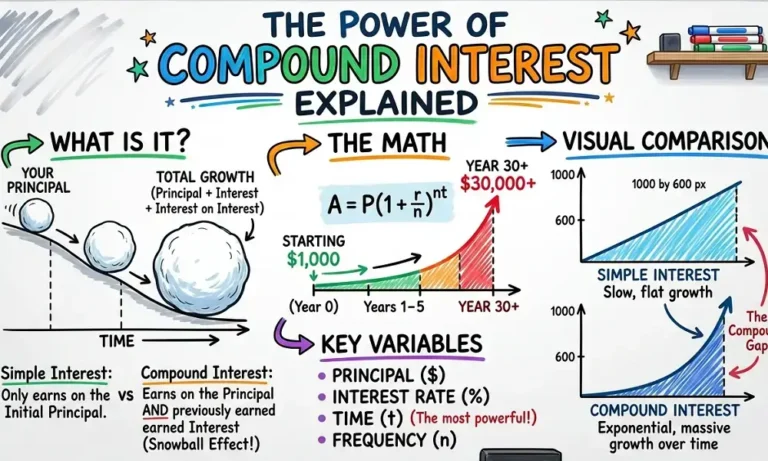
Because investments grow over time, and the profits can also start producing more profits.
This is called compound growth.
Think of it like a snowball rolling down a hill. It starts small, but as it rolls, it becomes bigger and bigger.
That is why many successful investors always say:
Start early.
You do not need to start with big money.
Starting small and staying consistent is far more important.
Common Beginner Mistakes
Many beginners think investing is only about making money quickly.
That mindset can cause problems.
Some people invest money they actually need for emergencies.
Others copy what friends are doing without understanding anything.
Some panic when investments go down temporarily and quickly sell everything.
Good investing requires patience and learning.
You do not have to know everything before starting, but you should understand the basics before putting your money anywhere.
Another mistake is waiting forever.
Some people keep saying:
“I will start when I become rich.”
But investing is often how people become financially stronger over time.
Even small amounts can grow if given enough time.
How Beginners Can Start Investing
If you are a beginner, start simple.
First, learn about money management.
Understand how to budget and avoid unnecessary debt.
Second, build an emergency savings fund.
This helps you avoid selling investments during emergencies.
Third, start learning about different investment options.
You can read books, watch educational videos, listen to podcasts, or learn from trusted financial experts.
Then start small.
You do not need huge money to begin investing.
The goal in the beginning is not becoming rich overnight.
The goal is building the habit of investing consistently.
Over time, your knowledge and confidence will grow.
Final Thoughts
So, what is investing?
Investing is using your money, time, or resources today to create more value and income in the future.
It is not magic.
It is not only for rich people.
And it is not about getting rich overnight.
Investing is about patience, growth, and making smart decisions consistently over time.
The earlier you understand investing, the better your chances of building a more secure future.
Even if you start small, starting now can make a huge difference years from today.
Because in the end, money that sits still stays the same.
But money that is invested has the chance to grow.
Frequently Asked Questions
1. What is investing in simple terms?
Investing is using your money today to buy or support something that can grow in value or generate income in the future. Instead of letting money sit idle, you put it into things like businesses, land, or other assets so it can increase over time.
2. Do I need a lot of money to start investing?
No, you don’t need a large amount of money to start investing. What matters more is consistency and starting early. Even small amounts, when invested regularly and over time, can grow into something meaningful.
3. What is the difference between saving and investing?
Saving is keeping your money safe for future use without risk of losing value. Investing is putting your money into something that can grow over time, but it also comes with some level of risk.
4. Is investing risky?
Yes, investing always carries some level of risk because the value of your investment can go up or down. However, with proper research and patience, you can reduce risks and make better decisions.
5. How long does it take to see results from investing?
Investing is usually a long-term process. Some investments may grow in a few months, but most take years to show significant results. Patience is one of the most important parts of investing.
6. What is the best investment for beginners?
There is no single “best” investment for everyone. Beginners often start with simple options like saving plans, small businesses, or learning skills that increase income. The best investment depends on your goals, risk level, and understanding.