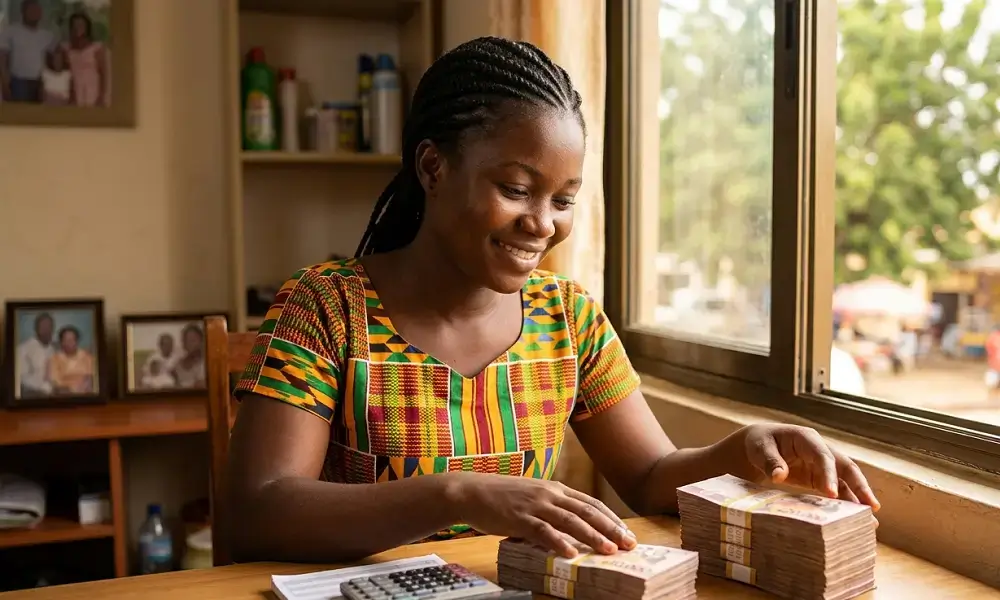
There’s a level of money that changes how a person thinks.
Not because it makes you rich overnight.
Not because all your problems disappear.
But because it finally gives you breathing room.
For many people in Ghana and across Africa, reaching your first ¢10,000 feels like climbing a mountain.
You remember the days when even buying data felt stressful.
When transport money was a problem.
When every little expense looked like an emergency.
So when you finally save or earn ¢10,000, life begins to feel different.
But here’s something many people don’t realize…
As powerful as ¢10,000 is, ¢20,000 changes your life even more.
Because the first ¢10,000 helps you survive better.
The second ¢10,000 helps you build.
And there is a huge difference between surviving and building.
Let’s talk about it.
Table of Contents
The First ¢10,000 Gives You Stability
Most people live in constant pressure.
Every month is a fight.
Every bill is urgent.
Every small problem becomes a crisis.
If your phone spoils, you panic.
If you lose your job, you struggle immediately.
If a family emergency comes, everything collapses.
Why?
Because there is no financial cushion.
That’s why your first ¢10,000 matters so much.
It creates breathing space.
For the first time, you stop making decisions out of fear.
Now, let’s be honest.
¢10,000 is not enough to retire.
It’s not enough to become a millionaire.
It cannot even buy your dream car.
But psychologically, it changes everything.
Because now you know something important:
“I can actually save money.”
That mindset alone is powerful.
Many people never experience holding that amount at once.
Not because they are lazy.
But because life keeps taking money from them before it grows.
Rent.
Food.
Transport.
School fees.
Unexpected expenses.
So when someone reaches ¢10,000, it becomes proof that progress is possible.
And that confidence changes behavior.
You Stop Living Only for Today
One dangerous thing about being broke is that it forces you to think only about today.
You become focused on immediate survival.
“What will I eat today?”
“How will I pay this bill?”
“How will I manage this week?”
This is where long-term thinking disappears.
But when you reach ¢10,000, something changes.
Your brain becomes calmer.
Now you can think ahead.
You begin asking better questions.
“How can I grow this?”
“What business can I start?”
“How can I make more money?”
“What investment makes sense?”
That is the beginning of financial growth.
Because wealth starts with thinking long-term.
Poor financial situations force short-term thinking.
Financial stability creates long-term thinking.
That’s why the first ¢10,000 is important.
It changes your mental position.
The Problem Most People Face
Many people stop at ¢10,000.
Not physically.
Mentally.
They reach that level and relax too early.
Suddenly they feel rich.
They start spending more carelessly.
Buying unnecessary things.
Trying to impress people.
Living beyond their means.
And slowly, the money disappears.
This is one of the biggest financial mistakes young people make.
The first small success makes them feel they have “made it.”
But the truth is…
¢10,000 is not the destination.
It is only the beginning.
And this is where the second ¢10,000 becomes life-changing.
The Second ¢10,000 Changes Your Position
The first ¢10,000 gives you relief.
The second ¢10,000 gives you options.
That is a completely different level.
At ¢20,000, you start gaining power over your decisions.
Now you can think about bigger moves.
You can buy equipment for a business.
You can start a small farm.
You can import products.
You can invest properly.
You can survive longer without panic.
You can handle emergencies without starting from zero again.
You begin operating differently.
And here’s something important:
Money behaves differently when it becomes bigger.
For example, if you only have ¢500, every expense hurts badly.
But at ¢20,000, money starts becoming a tool instead of only survival support.
Now you can use money to create more money.
That is where real financial growth begins.
The Difference Between Consumption and Investment
This is one lesson many people learn too late.
Small money usually gets consumed.
Larger money can be invested.
Think about it carefully.
If someone gives you ¢100 today, it will likely disappear quickly on food, transport, airtime, or small expenses.
Even ¢1,000 can vanish fast if there is no plan.
But ¢20,000 creates room for meaningful action.
You can divide it wisely.
Some for savings.
Some for investment.
Some for emergencies.
Some for business.
That structure changes everything.
This is why financially disciplined people focus more on growing money than showing money.
Because they understand something important:
Money that is invested multiplies.
Money that is only spent disappears.
Why Most People Never Reach the Second ¢10,000
The truth is painful.
Most people sabotage themselves after their first breakthrough.
The moment small money enters their hands, pressure increases.
Friends start calling.
Family requests increase.
Lifestyle changes begin.
Some people suddenly want expensive phones.
Others want fashionable clothes.
Some want to “enjoy life small.”
And before they realize it, the opportunity is gone.
This is why financial maturity matters more than income.
A person earning ¢3,000 monthly with discipline may build wealth faster than someone earning ¢10,000 with poor habits.
Because income alone does not create wealth.
Management creates wealth.
The Hidden Power of Financial Patience
One thing successful people understand is delayed gratification.
That simply means resisting small pleasures today for bigger rewards tomorrow.
And honestly, this is hard.
Especially when you come from a background where you struggled financially.
The moment money arrives, the temptation to spend becomes very strong.
You want to reward yourself.
You want comfort.
You want people to finally respect you.
That feeling is normal.
But disciplined people ask themselves one important question:
“Will this purchase help my future or only satisfy today?”
That question can change your financial life.
Because many people destroy tomorrow trying to impress people today.
¢20,000 Gives You Confidence Others Can Feel
There’s a type of confidence that comes from financial stability.
Not pride.
Not arrogance.
Just peace of mind.
You sleep differently when you know an emergency won’t destroy you immediately.
You think differently when you know you have backup money.
You negotiate differently when you are not desperate.
Even in business, confidence matters.
A desperate person often accepts bad deals.
A financially stable person can wait patiently for better opportunities.
That patience creates better decisions.
And better decisions create better results.
Building Wealth Is Usually Slow at First
One mistake social media has created is making people think success should happen instantly.
People see flashy lifestyles online and assume everyone is becoming rich overnight.
But real wealth usually grows quietly.
Slowly.
One step at a time.
The first ¢1,000 feels difficult.
Then the first ¢5,000.
Then ¢10,000.
Then ¢20,000.
Each level teaches you something.
Discipline.
Patience.
Self-control.
Planning.
Risk management.
Financial growth is not only about money.
It is also about becoming the kind of person who can manage larger opportunities.
Because if your mindset does not grow, bigger money can actually destroy you faster.
You Don’t Need to Start Big
Sometimes people hear numbers like ¢10,000 or ¢20,000 and feel discouraged.
But remember this:
Nobody starts there.
Most financially stable people started very small.
Some started selling simple products.
Some learned a skill.
Some saved little by little.
Some started side hustles.
Some failed businesses before succeeding.
Growth is usually gradual.
The important thing is consistency.
Saving regularly matters.
Learning valuable skills matters.
Avoiding unnecessary spending matters.
Investing wisely matters.
Small smart actions repeated over time create big results.
The Real Goal Is Freedom
At the end of the day, money is not only about luxury.
Real financial success is about freedom.
Freedom from constant stress.
Freedom from panic.
Freedom from depending on everyone.
Freedom to make better decisions.
Freedom to help others when necessary.
That is why the journey from ¢10,000 to ¢20,000 matters so much.
The first level gives you hope.
The second level gives you momentum.
And momentum is powerful.
Because once people realize financial growth is possible, they begin aiming higher.
Final Thoughts
If you currently have less than ¢10,000, don’t feel discouraged.
Everybody starts somewhere.
The important thing is learning how money works early.
Learn to save.
Learn to control spending.
Learn to build income sources.
Learn to think long-term.
And if you already reached ¢10,000, don’t stop there.
Don’t let temporary comfort slow your growth.
Use that level as a foundation.
Because while ¢10,000 changes your situation…
¢20,000 changes your possibilities even more.
And sometimes, the biggest difference in life is not just having money…
It’s finally having options.